What is nanomedicine?

Nanomotor - courtesy of Berkeley Lab

Definition:

Nanomedicine is the medical application of nanotechnology that will hopefully lead to useful research tools, advanced drug delivery systems, and new ways to treat disease or repair damaged tissues and cells. Drug delivery is currently the most advanced application of nanotechnology in medicine. Nanoscale particles are being developed to improve drug bioavailability, a major limitation in the design of new drugs. Poor bioavailability is especially problematic with newer and still experimental RNA interference therapy. Lipid or polymer-based nanoparticles are taken up by cells due to their small size, rather than being cleared from the body. These nanoparticles can be used to shuttle drugs into cells which may not have accepted the drug on its own. The nanoparticle chaperone may also be able to specifically target certain cell types, possibly reducing toxicity and improving efficacy.

Nanoparticles:

Nanoparticles such as quantum dot nanocrystals are the size of a protein molecule or short stretch of DNA. Quantum dots can be engineered to absorb and emit many wavelengths of light with very sharp precision. This makes them ideal for protein-protein interaction studies as they can be linked to molecules to form long-lived probes. They can track biological events by tagging specific proteins or DNA in order to follow their progress through biological pathways. In medicine, quantum dots could be used for diagnostic purposes.

Dendrimers:

Dendrimers are another interesting and powerful use of nanotechnology in medicine. Dendrimers are nanostructured synthetic molecules with a regular branching structure projecting from a central core. Dendrimers form one layer at a time so the size of the dendrimer is determined by the number of synthetic steps. Each dendrimer is usually only a few nanometers wide. The outside layer can be engineered to be composed of specific functional groups that can act as hooks to specifically bind other molecules such as DNA. Dendrimers may act as effective agents for delivering DNA into cells during gene therapy. While viral vectors typically trigger an immune response, in principle, dendrimers should not.

Molecular nanotechnology:

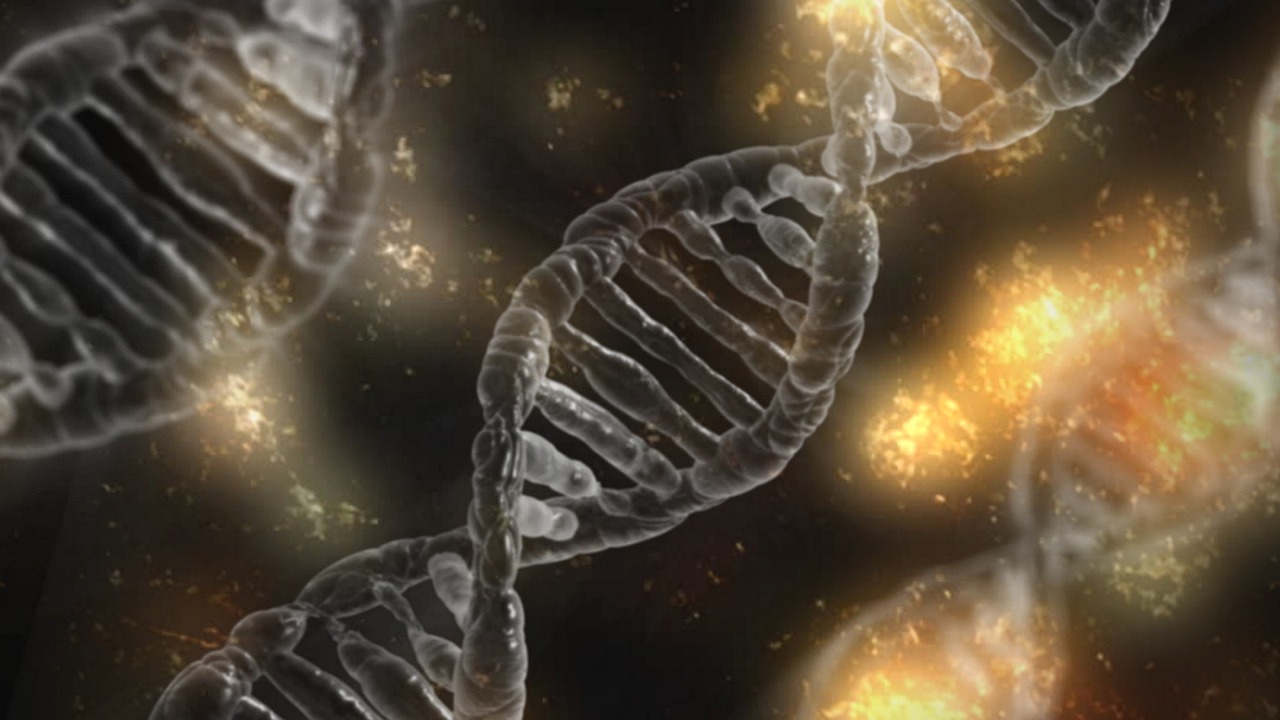
Nanorobotics or molecular nanotechnology involves the creation of complex mechanical systems constructed from the molecular level. Richard Feynman was the first to propose using machine tools to make smaller machine tools which can make smaller machine tools down to the atomic level. DNA makes an ideal material for the construction of nanomachines due to its stiffness. The intermolecular interactions of DNA are well-known and can be easily predicted. The self-assembly of DNA further facilitates its use as a construction material. Dr. Nadrian Seeman pioneered the use of DNA as a
construction material and can make virtually any regular 3D shape. In 1999 his group succeeded in building the first nanoscale robotic actuator from DNA. DNA and later, nanotubes, have been used to construct molecular tweezers which can be used to physically manipulate nanostructures. Research into the construction of nanomotors has advanced greatly and nanomotors will form an important part of future nanorobots. Carlo Montemagno at Cornell has mutated the central rotating shaft of ATPase to have metal-binding amino acids that allow the ATPase to bind to nanoscale nickel pedestals. A silicon bar 100 nanometers long was bound to the rotor subunit of each ATPase by self-assembly, creating an ATP-powered molecular motor. These nanorobots may eventually form sophisticated cellular factories, used to synthesize drugs, repair damaged DNA, and releasing drugs on command.


Featured Nanomedicine Content

  • Graph nanomedicine articles over time - Plot the number of articles that have been published over time in specific areas of nanomedicine research or in all of basic research. You can gauge changes in interest in certain topics and use this to guide your research. It also makes a good introductory slide for a presentation as it demonstrates the importance of your topic.
Recent nanomedicine jobs are highlighted here. Jobs are updated twice a day. Occasionally, we also feature jobs that may be of particular interest to our readers below. Job postings are free for academic and nonprofit groups. If you would like to post a job, click here.
   Browse all of our nanomedicine jobs.


Recent nanomedicine literature is highlighted with this tool. We have taken the entire set of nanomedicine articles and arranged them according to their previous or expected citation rate. This allows you to quickly identify the most important articles in the field.

Articles are updated daily and advance publications are shown before they appear in medline and they are updated every hour.

Click here to use the tool.


Recent nanomedicine news and press releases are highlighted. We scour over 20,000 news sources to bring you the latest nanomedicine news. The information is updated every 4 hours, so you can be sure to be getting the latest news on the topic.

Click here to view the news.


Nanomedicine laboratories are featured here. We have actually profiled nearly 99% of all nanomedicine laboratories. We have also ranked all labs based upon the citation rating of the papers of the principal investigator. Laboratories may alter information on each lab page including picture, publications, affiliation, and biography. Below you will find the top 20 nanomedicine laboratories.

Click here to view the labs.


Related Portals


Useful Resources


Our Other Websites

Article Index: 2009  | 2008  | 2007  | 2006  | 2005  | 2004  | 2003  | 2002  | 2001  | 2000  | 1999  | 1998  | 1997  | 1996  | 1995  | 1994  | 1993  | 1992  | 1991  | 1990
Lab Index: A-B  | C-D  | E-F  | G-H  | I-J  | K-L  | M-N  | O-P  | Q-R  | S-T  | U-V  | W-X  | Y-Z
Jobs Index  | Book Index  | Clinical Trial Index


Copyright © 2004-2010 ICMG Ltd. Medical literature citations were obtained from the National Center for Biotechnology Information. Protein database information was obtained from the European Bioinformatics Institute.
Life Science Trends | US Hospitals | Schools | 


Privacy policy | Contact us